
What a website actually does for a small company
It gives the owner something to show
A lot of business in Taiwan still starts with a conversation, a referral, or a meeting. What decides the second meeting is often what happens when the other side looks you up afterwards. A website is the one asset you can hand over on the spot — open it on a phone at the table, or send the link after the call.
New clients trust what they can inspect
A prospect who has never met you judges from what is in front of them: whether the site loads, whether it works on their phone, whether it explains what you do without them having to guess. Those details are read as a proxy for how you will handle their project — fairly or not, that is how it works.
Your marketing material gets a permanent home
Photos, product descriptions, past work, contact details — most of it already exists, scattered across LINE messages, a Facebook page and someone's phone. A site is where that stops being scattered, which is usually what makes marketing feel easier afterwards rather than any single clever tactic.
How we build
Mobile first, because that is where it gets opened
The link you send gets opened on a phone, usually on mobile data, often outdoors. We build for that case first and let the desktop layout follow, rather than the other way round.
Content before decoration
We start from how you already explain your business to a customer standing in front of you, because that version is usually clearer than anything written to sound impressive. Then we design around it.
Fast, and findable
A slow site undoes the credibility it was built for. We keep pages light and handle the SEO basics — titles, descriptions, structured data, a sitemap — so that when someone searches your company name, they find you rather than something else.
A worked example: Chang-Fu Rice Drying Center
Chang-Fu Rice Drying Center dries harvested grain and settles with farmers by weight. Before the site, the business existed almost entirely through word of mouth — which works, right up until someone wants to check you out before committing.
We built them a straightforward, mobile-first site: what the drying center does, how it works, and how to reach them. Nothing elaborate — the point was that the business now has an address of its own on the web instead of existing only in other people's memory.
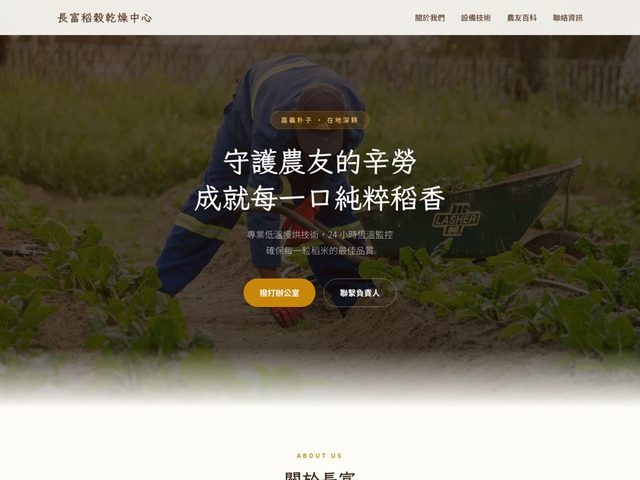
We are not going to put a conversion figure on this. We did not have analytics on the business before the site existed, so any percentage here would be invented. What we can say is what the site is used for: it is the thing they can now point people to.
The same client later asked us to replace their paper weighing process with a system — that side of the project is described on the ERP system development page.
What a project usually covers
- Working out what the site needs to say, from how you already describe the business
- Design and build, mobile first, tested on real phones
- Photography direction or working with what you already have
- Titles, descriptions, structured data, sitemap and search-engine submission
- Handover and support after launch, so small edits do not need a new quote
Who this is a good fit for
Companies that already have real business and real customers, but nothing solid to point at online. If people already trust you once they meet you, the site's job is to move that trust earlier — to the moment before the meeting.
If what you actually need right now is more enquiries rather than more credibility, say so at the first conversation. That is a different piece of work, and sometimes the honest answer is that a website is not the first thing to spend on.